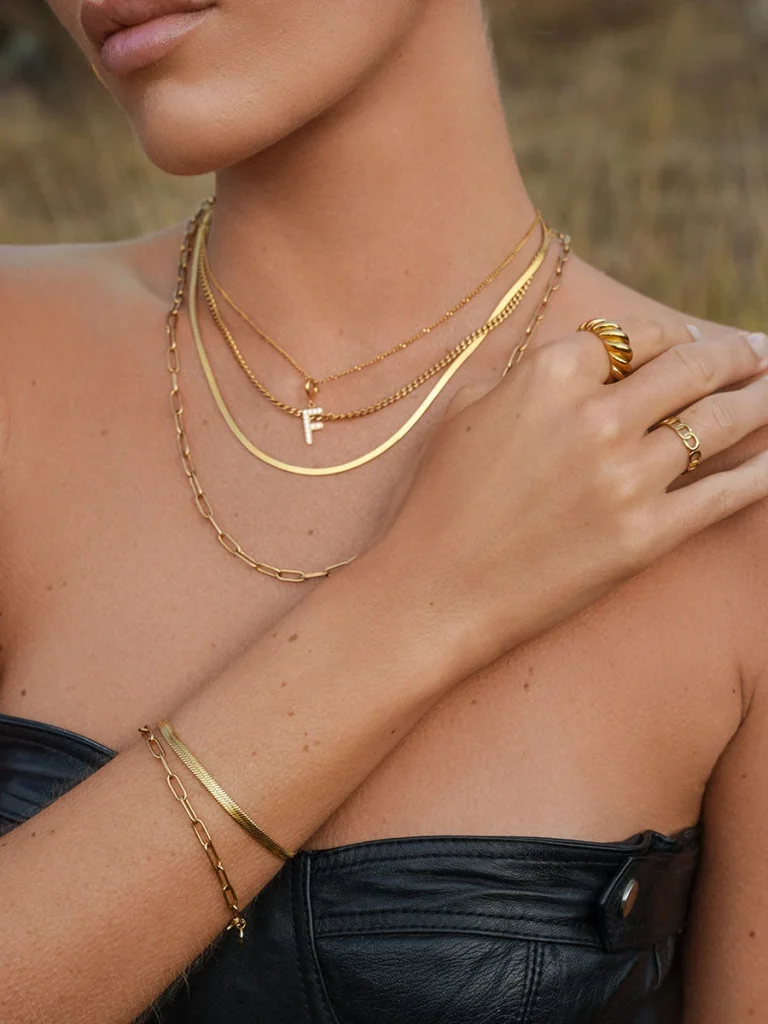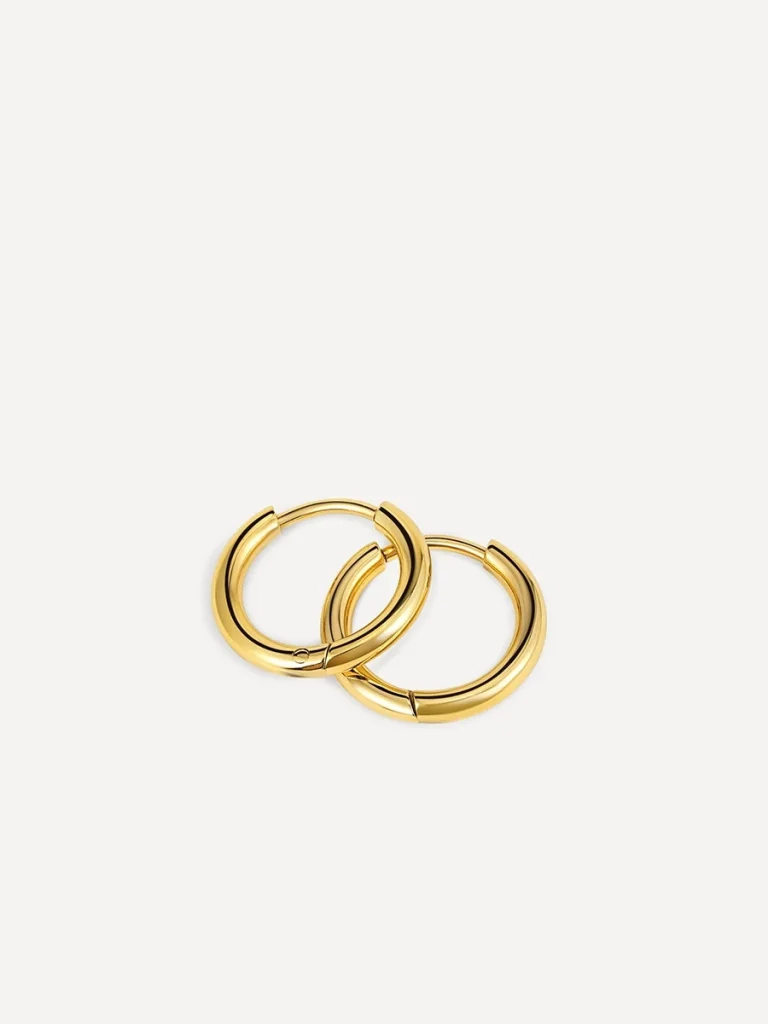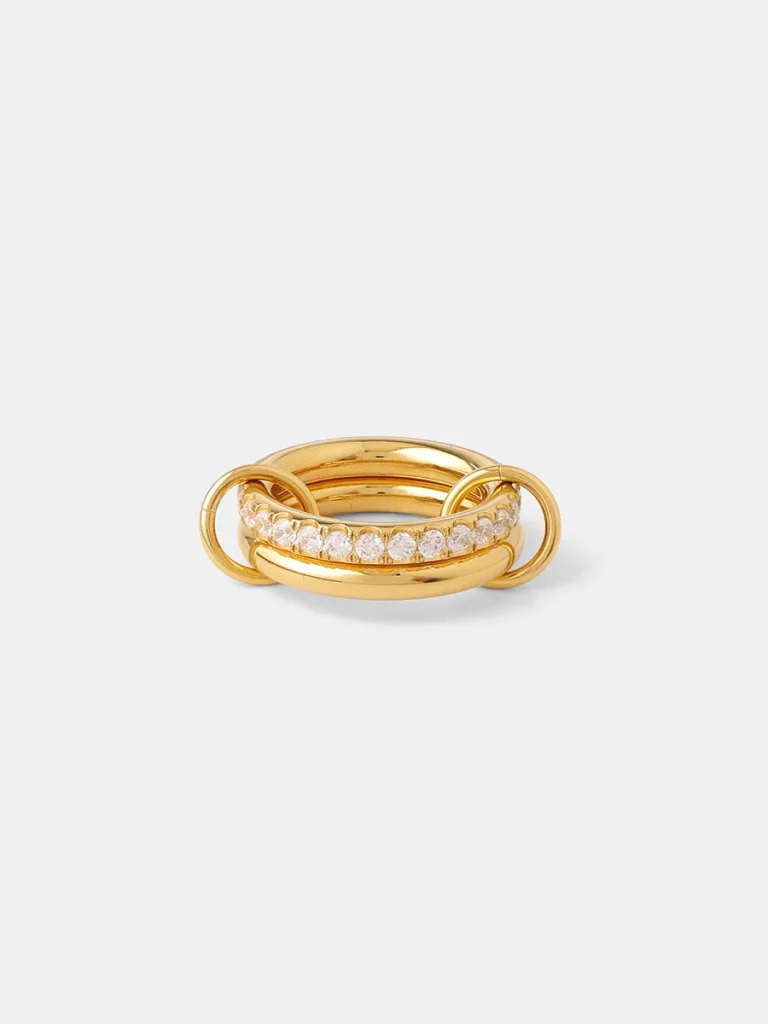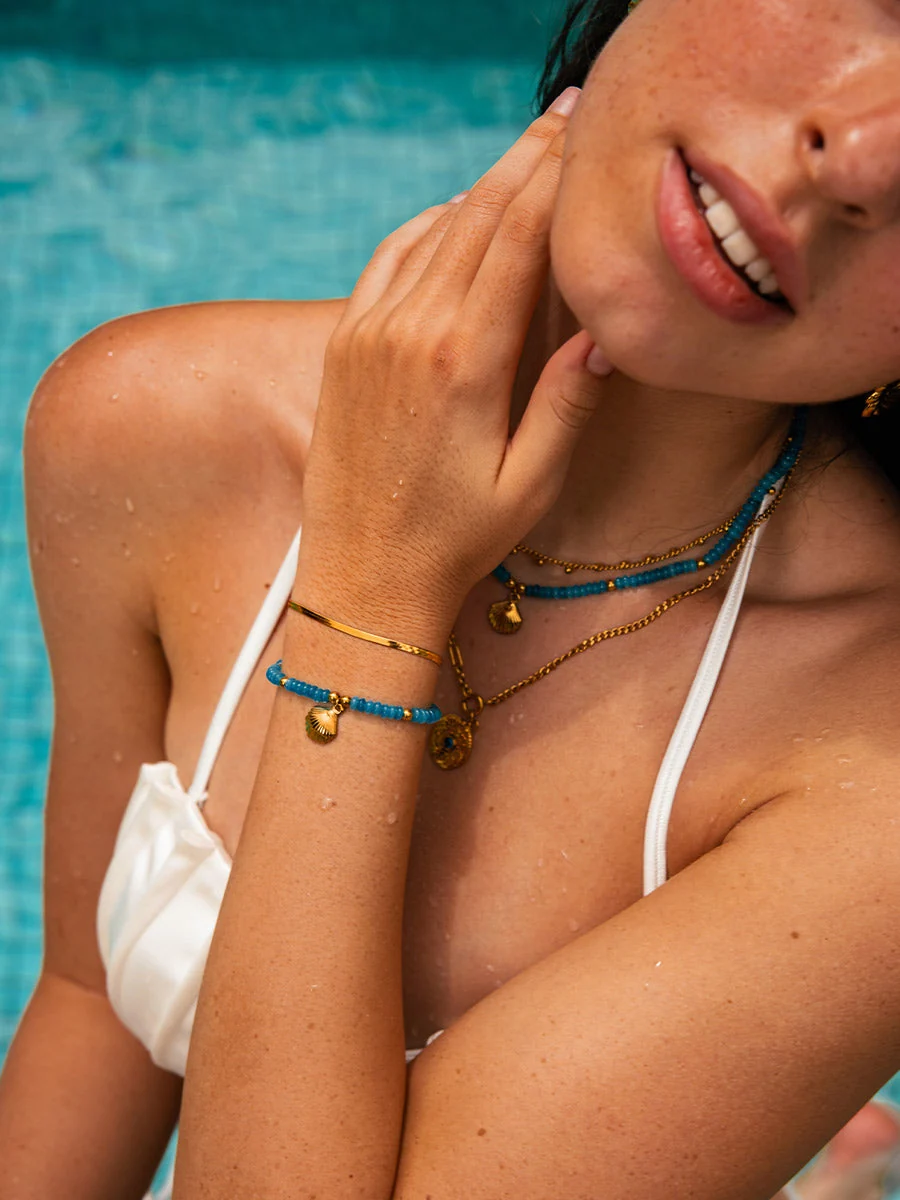
Begin with the complete piece
ICRUSH’s materials guide presents stainless steel, including plated stainless steel, as resistant to regular water contact. Its care guide also advises avoiding excessive water exposure for plated jewelry in general. Read those statements alongside the exact product instructions rather than applying one promise to an entire collection. A bracelet or necklace can include pearls, stones, coatings and fittings that need different handling from the main metal component.
Treat a splash as a useful pause
If a piece gets wet during an ordinary day, identify what it is made from before reaching for a cleaner or deciding it needs a long soak. Where its instructions permit, remove residue gently and dry with a soft cloth. Check around clasps and attached details before putting the jewelry away. Our practical approach is to respond to the actual exposure and the piece’s condition, rather than assuming every contact with water means either damage or complete protection.
Salt water calls for follow-up
The official materials guide says stainless steel jewelry can tolerate sea water, while still recommending removal before bathing and a fresh-water rinse after sea contact. It treats sterling silver more cautiously and advises removing it because salt can affect the metal and plating. Keep those distinctions in view. If the exact material or the care of an attached detail is unclear, taking the jewelry off before swimming is the straightforward editorial choice.
Be more cautious around the pool
ICRUSH notes that chlorine can affect jewelry and gives different guidance for different materials. Its pearl section specifically warns that chlorine can damage the nacre surface, while sterling silver also receives stronger precautions. We recommend removing jewelry before swimming when you want a simple routine that avoids having to assess the pool’s conditions. Water resistance should not be interpreted as a universal guarantee for every coating, fitting or decorative component.
Keep pearls out of the swimming routine
Even outside chlorinated water, the guide says frequent water exposure can diminish pearl luster. A steel clasp does not cancel that more delicate material’s needs. Remove pearl necklaces, bracelets and earrings before a swim, and keep them away from direct perfume and cosmetic contact while getting ready. If a pearl piece becomes wet, follow its specific cleaning and drying advice rather than treating it like a plain metal chain or band.
Build an easy habit for travel
Pack a small, separate place for jewelry so removal before the pool, exercise or a shower does not become an improvised decision. Keep pieces apart, let them dry appropriately before storage and retain their material descriptions for reference. ICRUSH’s care guide recommends removing jewelry for sport and sleep and avoiding household chemicals. These habits support the finish and fittings without relying on absolute claims that plating will never change or every piece can remain on indefinitely.
Sources & further reading
- iCRUSH official source — What water-resistant jewelry still needs (1)
- iCRUSH official source — What water-resistant jewelry still needs (2)
- iCRUSH official source — What water-resistant jewelry still needs (3)
Product details can change. Refer to the linked official sources for current dimensions, materials, availability and care guidance. Styling suggestions are editorial opinions.